
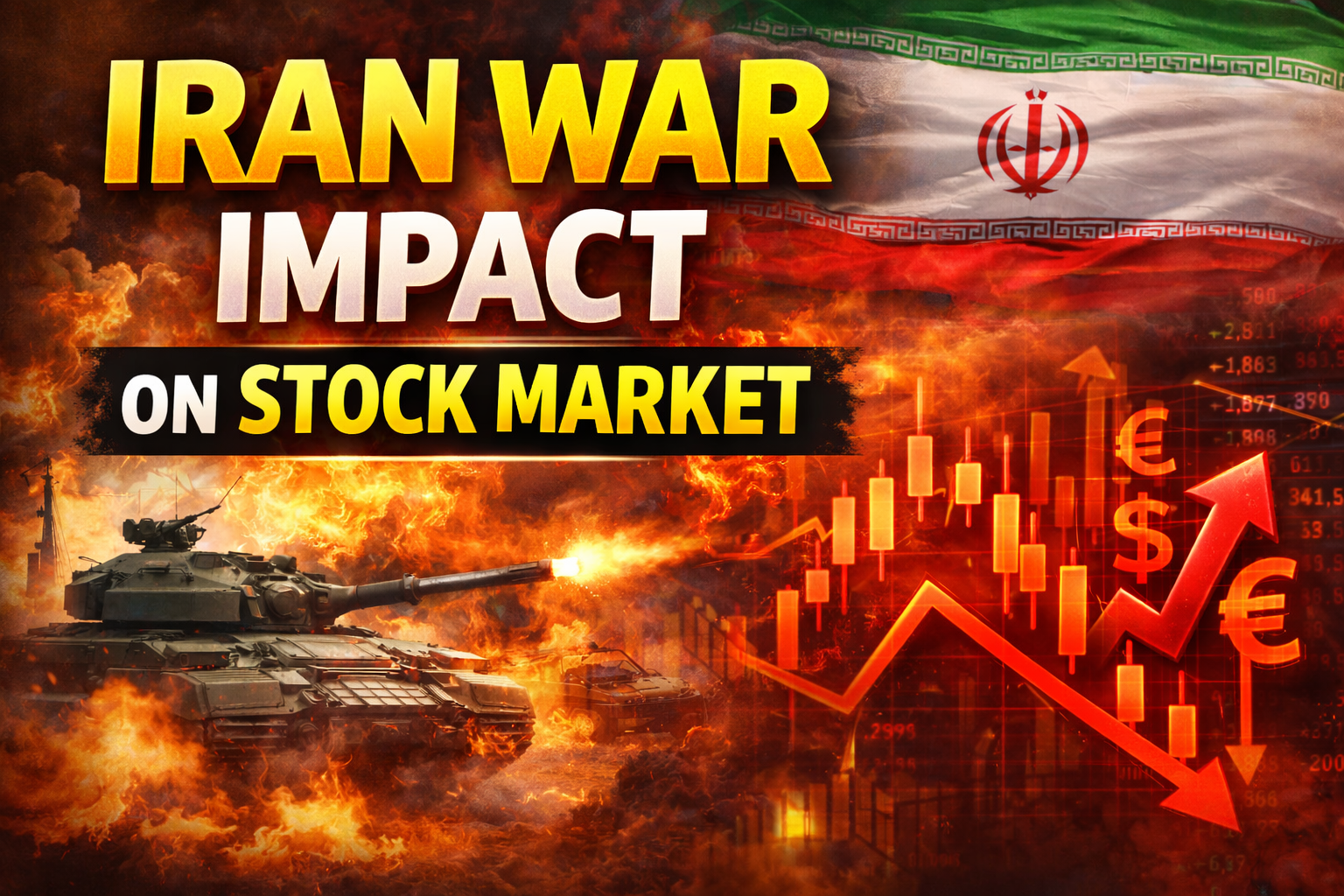
Iran War Impact on Stock Market: How the Conflict Is Shaking Global Financial Markets
The escalating conflict involving Iran and its regional rivals has sent shockwaves through global financial markets. Wars in energy-rich regions rarely remain local events—they quickly influence oil prices, inflation, currency markets, and stock indices worldwide.
In 2026, the Iran conflict has once again demonstrated how geopolitical tensions can rapidly move global markets. Rising crude prices, supply chain disruptions, and investor uncertainty are creating volatility across stock exchanges from Wall Street to Asia.
This article explores how the Iran war affects stock markets, which sectors are winning or losing, and what investors should watch next.
Why Wars in the Middle East Affect Stock Markets
The Middle East holds some of the largest oil reserves in the world, and global markets are extremely sensitive to disruptions in this region.
A key strategic point is the Strait of Hormuz, a narrow shipping route through which roughly 20% of the world’s oil supply passes. Any disruption there can send oil prices sharply higher and trigger global economic consequences. (Investopedia)
Because oil is essential for transportation, manufacturing, and energy production, a sudden price surge can impact:
- Corporate profits
- Inflation levels
- Interest rate policies
- Consumer spending
This is why stock markets often react immediately when conflict escalates in the region.
Immediate Reaction of Global Stock Markets
When the Iran war intensified, markets around the world reacted with sharp volatility.
- Major stock indices fell as investors rushed into safer assets.
- Oil prices surged toward $90 per barrel, increasing inflation fears.
- Energy stocks rose while technology and airline stocks dropped. (New York Post)
At the same time, concerns about the war pushed investors toward gold, energy companies, and defense stocks, which typically benefit during geopolitical crises. (INDmoney)
Markets often respond more to uncertainty than to the war itself, which is why volatility increases dramatically during such events.
Oil Prices: The Biggest Market Driver
The most powerful channel through which the Iran war affects stocks is oil prices.
Escalating tensions in the region have already pushed crude prices sharply higher due to fears of supply disruptions. (Kavout)
In fact, oil prices experienced one of their largest weekly surges in years, with analysts warning prices could exceed $100 per barrel if shipping disruptions continue. (Reuters)
Higher oil prices trigger several economic effects:
- Increased transportation costs
- Rising manufacturing expenses
- Higher inflation
- Lower consumer spending
All of these factors eventually weigh on corporate earnings and stock valuations.
Sector-Wise Impact on Stock Markets
Not all sectors react the same way during geopolitical conflicts.
1. Energy Stocks – Biggest Winners
Oil and gas companies often benefit from rising crude prices.
Examples include:
- Oil producers
- Refining companies
- Energy exploration firms
Higher oil prices mean higher profit margins, which can push energy stocks upward.
2. Defense Stocks – Rising Demand
Wars often increase government defense spending.
Companies involved in:
- weapons manufacturing
- aerospace
- defense technology
may see stronger demand and higher share prices during prolonged conflicts.
3. Airline and Transportation Stocks – Major Losers
Airlines are highly sensitive to fuel prices.
When crude prices rise sharply:
- airline operating costs increase
- profit margins shrink
- airline stocks often fall.
4. Technology Stocks – Mixed Reaction
Tech stocks can react differently depending on broader economic conditions.
If war leads to:
- higher inflation
- rising interest rates
then growth stocks like technology companies may face downward pressure.
Impact on Emerging Markets
Emerging economies are particularly vulnerable to oil shocks.
Countries like India, Japan, and South Korea import large amounts of oil. Rising crude prices can:
- increase trade deficits
- weaken currencies
- slow economic growth.
For example, analysts warn that the surge in oil prices due to the Iran conflict could pressure India’s stock market and increase inflation risks. (The Economic Times)
Inflation and Interest Rate Risks
Another major consequence of the Iran war is the potential return of global inflation.
Higher oil prices increase costs across the economy:
- fuel prices rise
- shipping becomes more expensive
- food and consumer goods prices increase.
Economists warn that persistent oil price spikes could force central banks to delay interest-rate cuts or even raise rates again, creating additional pressure on stock markets. (Kavout)
Historical Perspective: Markets Often Recover After War
Interestingly, history shows that markets often recover once uncertainty declines.
For example:
- During the 1991 Gulf War, oil prices dropped after military operations began and the stock market rallied strongly.
- During the 2003 Iraq War, stocks gained significantly once the conflict timeline became clearer. (James Investment)
This suggests that markets tend to fear uncertainty more than war itself.
What Investors Should Watch Now
Investors should closely monitor several key indicators during the Iran conflict:
1. Oil prices
The biggest driver of market sentiment.
2. Strait of Hormuz shipping activity
Any disruption could cause major supply shocks.
3. Central bank policy
Rising oil prices could delay interest-rate cuts.
4. Defense and energy sector performance
These sectors often outperform during geopolitical crises.
Final Insight
The Iran war highlights how geopolitics and financial markets are deeply connected.
Because the Middle East remains central to global energy supply, conflicts in the region can quickly trigger:
- oil price spikes
- inflation fears
- stock market volatility.
However, history suggests that once the uncertainty around war stabilizes, markets often recover and sometimes even rally.
For investors, the key lesson is clear:
Geopolitical crises create short-term volatility—but they also create long-term investment opportunities.

Related Posts

Moon Trading Strategy: How to Trade by Observing the Moon
Green Growth Crisis: Why India’s Lack of a Transition Finance Institution Could Derail Its Net-Zero Dreams