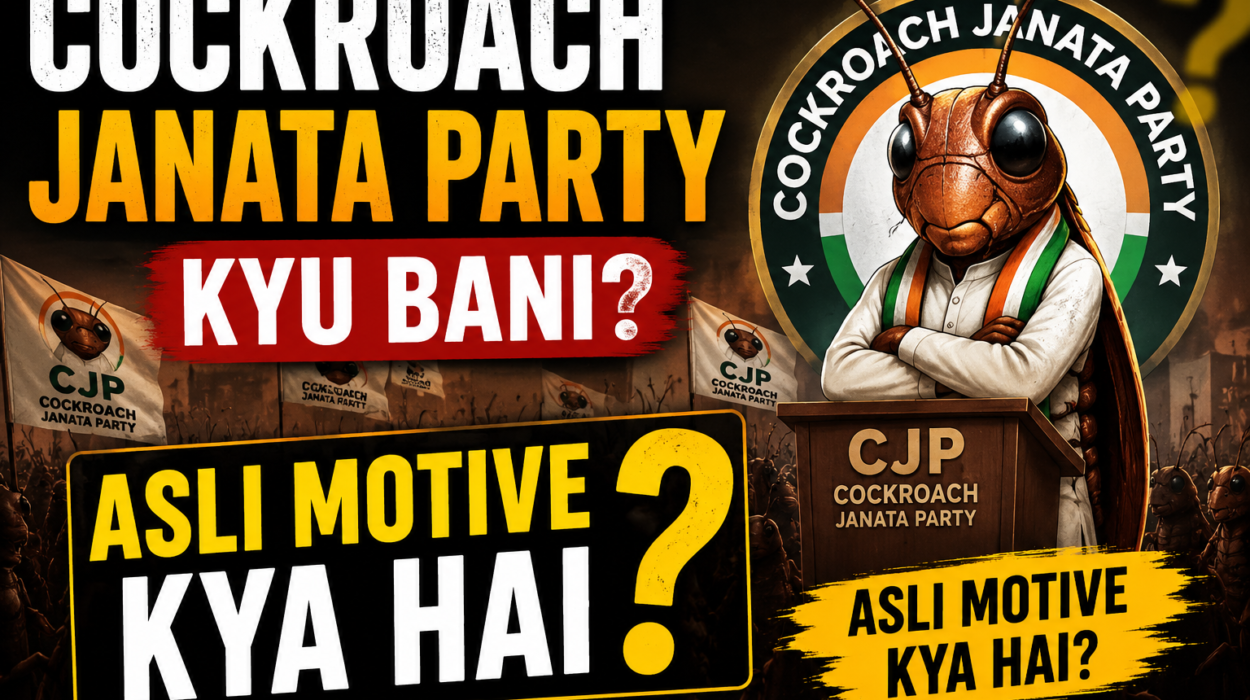
Aaj kal social media par har jagah ek hi naam trend kar raha hai Cockroach Janata Party (CJP Party). Instagram par millions mein followers gain karne wali ye viral movement sirf memes ya jokes tak limited nahi hai. Iske peeche ek bada reason hai jise jaan kar kaafi log surprise ho rahe hain.
Bahut log search kar rahe hain:
- cockroach janata party kya hai
- cjp party
To chaliye simple Hindi mein samajhte hain ki aakhir Cockroach Janata Party banane ka motive kya tha.
Cockroach Janata Party Kya Hai?
Cockroach Janata Party, yaani CJP Party, ek viral social media movement hai jo youth issues, unemployment aur political frustration ko funny aur satirical way mein present karti hai. Is movement ne bahut kam time mein internet par huge popularity gain kar li hai.
Abhi tak Cockroach Janata Party Instagram followers ki count around 15.7 million tak pahunch chuki hai, jo iski massive popularity ko show karta hai.
Cockroach Janata Party Banane Ka Asli Reason
Reports ke according, Cockroach Janata Party ka idea tab viral hua jab ek judge ke controversial remarks social media par trend hone lage. Chief Justice ke ek statement mein unemployed youth ko “cockroaches” aur “parasites” jaisa compare kiya gaya tha, jiske baad internet par kaafi outrage hua. Later clarification bhi di gayi, lekin tab tak youth audience ka reaction bahut strong ho chuka tha.
Isi controversy ke baad Abhijeet Dipke ne “Cockroach” word ko ek satire aur protest symbol ki tarah use karte hue Cockroach Janata Party launch ki.
Cockroach Janata Party Ka Motive Kya Hai?
CJP Party ka main motive youth ki problems ko highlight karna bataya ja raha hai, especially:
- unemployment
- rising inflation
- lack of opportunities
- youth frustration
- political representation
Party khud ko “Voice of the Lazy and Unemployed” bhi bolti hai aur memes ke through social issues par baat karti hai.
Bahut se young users ko lagta hai ki unki voice politics mein properly represent nahi hoti, isi wajah se Cockroach Janata Party itni fast viral hui.
Cockroach Janata Party Founder Kaun Hai?
Internet par log kaafi search kar rahe hain:
- cockroach janata party founder
- cockroach janata party kon hai
Reports ke according, Cockroach Janata Party founder Abhijeet Dipke hain. Woh Boston mein studies kar rahe hain aur pehle political social media campaigns se bhi jude rahe hain.
CJP Party Itni Viral Kyu Ho Rahi Hai?
CJP Party ke viral hone ke peeche kai reasons hain:
- funny political satire
- relatable unemployment memes
- youth-focused content
- Instagram reels trend
- controversial origin story
Ye movement especially Gen Z audience ke beech bahut popular ho rahi hai. Kaafi users ek digital protest aur internet revolution ki tarah bhi dekh rahe hain.
Conclusion
Ab aap samajh gaye honge ki Cockroach Janata Party kya hai aur iska asli motive kya hai. Ye sirf ek meme page nahi, balki unemployed youth aur internet generation ki frustration ko represent karne wala viral movement ban chuka hai.
Judge ke viral aur controversial statement ke baad shuru hui ye movement aaj social media par tezi se trend kar rahi hai. Founder Abhijeet Dipke ki Cockroach Janata Party ne ab Instagram par 15.7 million followers ka bada milestone cross kar liya hai, jiski wajah se CJP Party internet par ek hot topic ban chuki hai.