
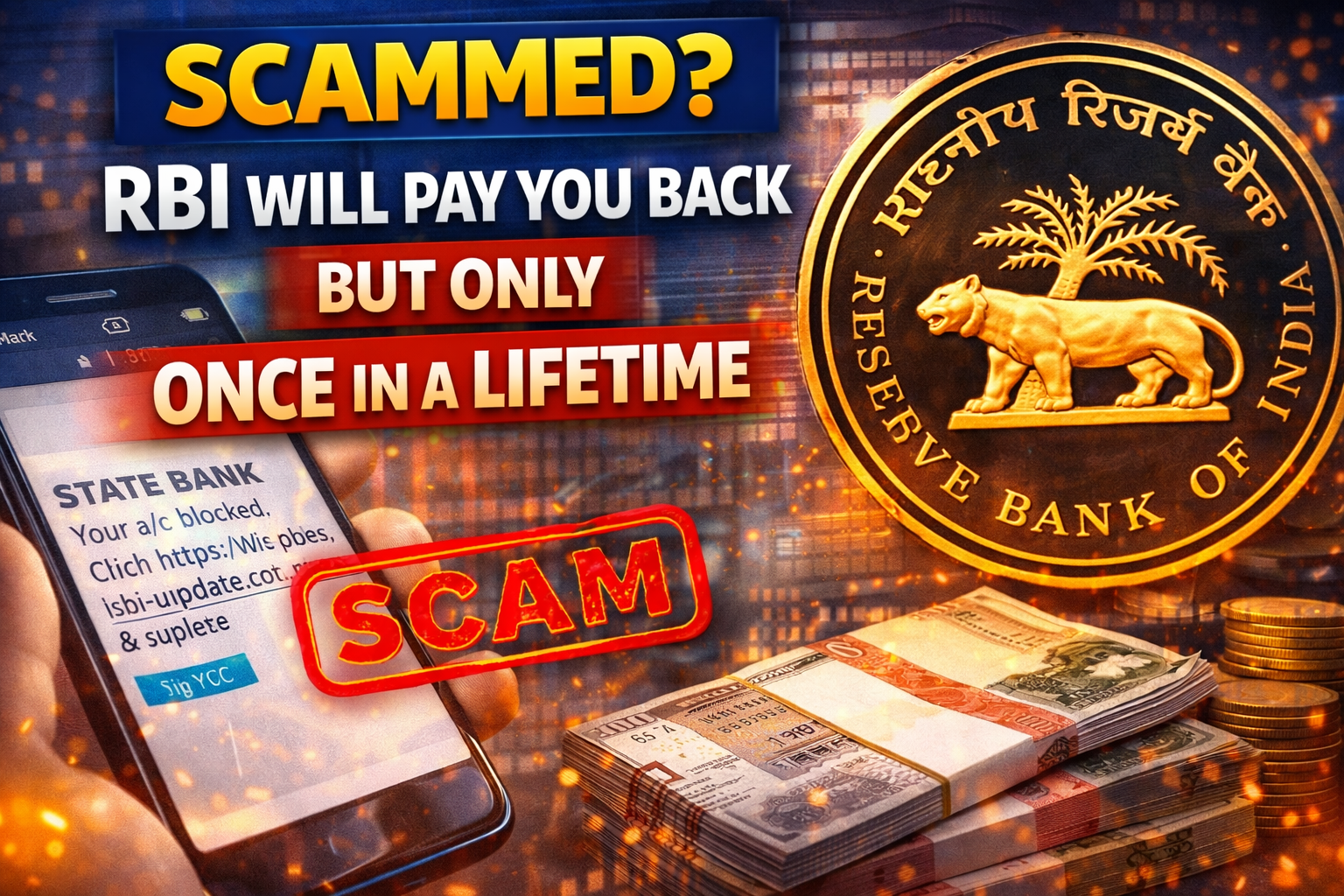
Scammed? RBI Will Pay You Back — But Only Once in a Lifetime
Digital payments have made banking faster and more convenient in India. However, the rise of online banking, UPI payments, and mobile wallets has also led to a surge in online financial frauds and scams. From phishing messages to fake customer care calls, cybercriminals are constantly finding new ways to trick people into revealing sensitive banking information.
To protect customers, the Reserve Bank of India (RBI) has introduced several mechanisms that help victims recover money lost in digital fraud. But there is an important catch: such compensation or reimbursement may be limited and can sometimes be considered a one-time relief depending on the circumstances of the fraud and the customer’s negligence.
Here’s a detailed explanation of how RBI’s fraud protection rules work and what you must do if you become a victim of an online scam.
Rising Cases of Digital Payment Fraud
India’s rapid shift toward digital payments—especially after the rise of UPI and mobile banking—has brought convenience to millions of users. At the same time, cyber fraud cases have increased significantly.
Common types of banking scams include:
- Phishing messages asking users to click malicious links
- Fake bank calls requesting OTP or card details
- UPI collect request frauds
- QR code scams
- Remote access app frauds
Many victims lose money within minutes because scammers move the funds quickly across multiple accounts.
RBI’s Customer Protection Policy
To safeguard customers, the Reserve Bank of India introduced the “Customer Protection – Limiting Liability of Customers in Unauthorised Electronic Banking Transactions” framework.
Under these guidelines, banks must compensate customers depending on who is responsible for the fraud.
1. Zero Liability for Customers
Customers have zero liability if the fraud happens due to:
- Bank negligence
- System failure at the bank’s end
- Third-party breach where the customer did not contribute to the fraud
In such cases, the bank must refund the entire amount.
2. Limited Liability
Customers may have limited liability if the fraud occurs due to third-party actions but the customer reports it quickly.
For example:
- If the fraud is reported within three working days, the customer usually bears no loss.
- If reported between four and seven days, the customer’s liability may be capped depending on the account type.
3. Customer Negligence
If the customer shares sensitive details such as OTP, password, or PIN, banks may treat it as customer negligence.
In such situations:
- The customer may have to bear the loss until the fraud is reported.
- Recovery may become difficult.
This is why experts often say that compensation should not be relied upon repeatedly, as banks may treat such cases as customer negligence if basic safety rules are ignored.
Why It Is Often Called “Once in a Lifetime”
Financial experts and banking officials often warn customers that compensation for fraud should not be expected repeatedly.
If a person repeatedly becomes a victim of similar scams, banks may conclude that:
- The customer did not follow security guidelines.
- Sensitive information was shared carelessly.
In such cases, banks may refuse compensation, making the earlier refund effectively a one-time relief.
What to Do Immediately If You Are Scammed
If you suspect that your bank account has been compromised, quick action is crucial.
Follow these steps immediately:
1. Inform Your Bank
Contact your bank’s customer care or branch and request them to block transactions immediately.
2. Call the Cybercrime Helpline
In India, you can report financial fraud to the national cybercrime helpline 1930.
3. File a Complaint Online
You can also report scams through the government’s cybercrime portal operated by the Ministry of Home Affairs.
4. Document Everything
Keep records of:
- Transaction messages
- Bank alerts
- Screenshots of fraud messages or calls
These documents help banks investigate and process reimbursement claims.
Tips to Avoid Online Banking Scams
Prevention is always better than relying on compensation. To protect yourself:
- Never share OTP, PIN, or banking passwords with anyone.
- Avoid clicking suspicious links sent through SMS or WhatsApp.
- Do not install unknown apps suggested by callers.
- Always verify customer care numbers from official bank websites.
- Enable transaction alerts for all banking activities.
Banks and regulators repeatedly remind customers that no bank employee will ever ask for OTP or confidential details.
The Bottom Line
While the Reserve Bank of India has introduced strong consumer protection rules to help victims of digital fraud recover their money, compensation is not guaranteed in every case. It depends heavily on how quickly the fraud is reported and whether the customer followed basic security practices.
This is why experts say that refunds should not be relied upon repeatedly, as banks may treat repeated fraud cases as negligence.
In today’s digital banking world, staying alert and protecting personal banking details remains the best defense against financial scams.