
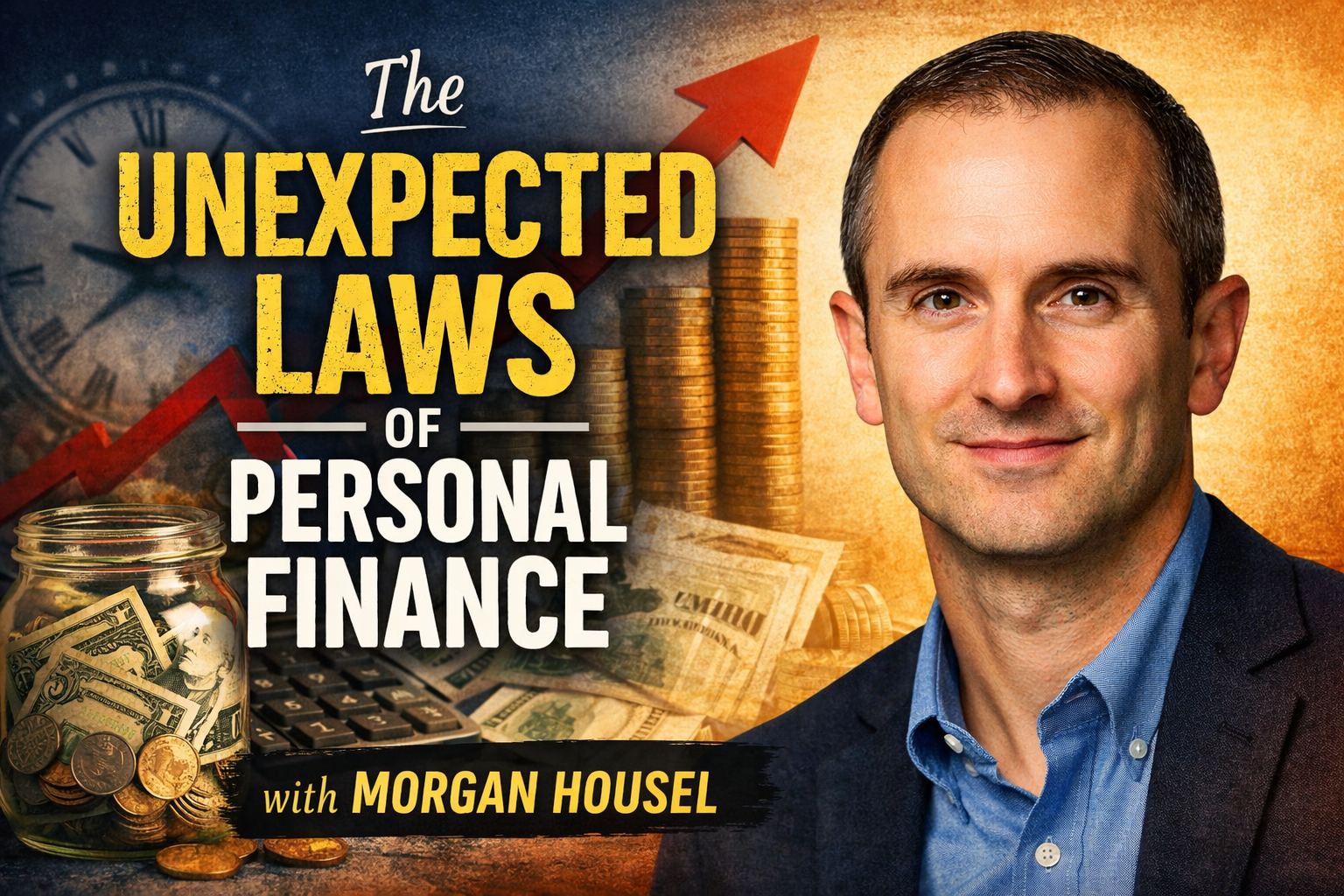
The Unexpected Laws of Personal Finance
Lessons Inspired by Morgan Housel
Personal finance is often taught like a math problem—earn more, spend less, invest wisely, and everything will fall into place. But real life refuses to behave like a spreadsheet. People with high incomes go broke, while modest earners quietly build massive wealth. Markets reward patience one year and punish intelligence the next.
This is where the ideas popularized by Morgan Housel, author of The Psychology of Money, feel almost revolutionary. He reminds us that money is not just about numbers—it’s about human behavior, emotions, luck, fear, and time.
Below are the unexpected laws of personal finance that most people ignore—and pay the price for later.
1. Financial Success Has More to Do With Behavior Than Intelligence
One of the most uncomfortable truths in personal finance is this:
Being smart doesn’t guarantee you’ll be wealthy.
Many people with PhDs struggle financially, while others with average IQs retire early. The difference is rarely intelligence—it’s behavior.
Good financial behavior looks boring:
- Living below your means
- Avoiding unnecessary debt
- Staying invested during crashes
- Saying “no” when everyone else is showing off
Bad financial behavior looks exciting:
- Chasing hot stocks
- Overleveraging during bull markets
- Panic-selling during crashes
Markets don’t reward brilliance consistently—but they punish poor behavior relentlessly.
2. Luck and Risk Are Always Present—But Rarely Acknowledged
We love stories of self-made success. What we dislike admitting is that luck plays a role—and so does risk.
Two people can make the same decision:
- One becomes rich
- The other goes bankrupt
The difference isn’t always effort or skill—it’s timing, environment, and randomness.
The lesson isn’t to downplay hard work, but to:
- Stay humble during success
- Stay resilient during failure
- Build margin of safety into your finances
Ignoring luck makes people arrogant. Ignoring risk makes them reckless.
3. Compounding Is Powerful—but Only If You Survive Long Enough
Compounding is often called the eighth wonder of the world, but there’s a catch:
Compounding only works if you don’t interrupt it.
Most people fail not because returns are low, but because they:
- Withdraw too early
- Panic during downturns
- Change strategies every year
Time is the secret ingredient—and time demands patience and emotional control.
Small returns over decades beat spectacular returns over a short, unstable period.
4. Wealth Is What You Don’t See
One of the most misunderstood concepts in personal finance is the difference between being rich and being wealthy.
- Being rich is visible: luxury cars, expensive watches, big houses
- Being wealthy is invisible: investments, savings, freedom, time
Spending money to look rich is the fastest way to never become wealthy.
True wealth is the ability to:
- Say no to bad opportunities
- Walk away from toxic jobs
- Choose how you spend your time
And none of that needs to be posted on social media.
5. The Goal of Money Is Freedom, Not Stuff
Money is often treated as a scoreboard—more money equals more success. But money’s real purpose is simpler:
Control over your time and choices.
The highest dividend money pays is independence:
- The ability to stop working if you want
- The ability to take risks without fear
- The ability to sleep peacefully
When money becomes a tool for ego instead of freedom, it stops serving you.
6. Reasonable > Rational in Personal Finance
Economic theory assumes people are rational. Reality proves otherwise.
A “perfect” financial plan that you can’t follow is useless.
A reasonable plan you stick to will outperform it every time.
This means:
- Choosing investments you understand
- Accepting moderate returns you can live with
- Avoiding strategies that cause stress or fear
Finance isn’t about optimizing returns—it’s about optimizing behavior.
7. Past Performance Is a Terrible Teacher of the Future
Humans are wired to project the recent past into the future. This is dangerous in finance.
- Bull markets convince people risk is gone
- Bear markets convince people opportunity is dead
Both are wrong.
The future will surprise you—positively and negatively. The best strategy is not prediction, but preparation:
- Emergency funds
- Diversification
- Low fixed expenses
Flexibility beats foresight.
8. Personal Finance Is Personal
There is no universal “best” strategy.
The right financial plan depends on:
- Your temperament
- Your income stability
- Your family responsibilities
- Your emotional tolerance for risk
Copying someone else’s strategy without understanding yourself is financial self-sabotage.
Good investing is less about finding the best assets—and more about finding a strategy you won’t abandon at the worst moment.
Final Thoughts
The unexpected laws of personal finance are uncomfortable because they don’t flatter our ego. They remind us that success with money is not about genius predictions or secret formulas.
It’s about:
- Patience over excitement
- Discipline over brilliance
- Humility over confidence
- Freedom over appearances
As Morgan Housel teaches us, money is a psychological game played in a world of uncertainty. Those who understand human behavior—not just numbers—are the ones who quietly win.